Key Concept
Continuous Threat Exposure Management is a cybersecurity approach for continuously identifying, evaluating, prioritizing, and reducing the exposures most likely to create real business risk.
Instead of treating vulnerability management as a periodic scan-and-fix exercise, CTEM creates an ongoing process for understanding how an organization’s attack surface changes, which exposures matter most, whether defenses are effective, and what should be remediated first.
The goal is not simply to find more vulnerabilities. It is to continuously reduce the exposures that attackers are most likely to exploit.

Defining CTEM
Modern attack surfaces change constantly. New applications are deployed. Open-source packages are updated. Cloud services change. New endpoints appear. And vulnerabilities continue to be disclosed against software that may have been running safely for months or years. Traditional vulnerability management often produces large lists of potential problems. The harder question is:
Which exposures actually create risk right now?
Continuous Threat Exposure Management helps organizations answer that question by combining technical vulnerability information with context about assets, applications, exploitability, business importance, and real-world exposure.
This allows security teams to move from:
Find and fix everything to:
Understand exposure / Prioritize what matters / Reduce risk continuously
| Question | CTEM Answer |
|---|---|
| What is running? | Deployed applications, services, components, and packages |
| Where is it running? | Environments, endpoints, and operational systems |
| What is vulnerable? | CVEs tied to deployed software |
| Who owns it? | Application and component ownership |
| What matters most? | Prioritized exposure based on deployment impact |
CTEM is a continuous, cyclical security process rather than a one-time assessment.
The framework is generally organized around five stages:
Scoping defines which systems, applications, assets, environments, or business processes should be evaluated. Rather than attempting to secure everything equally, organizations identify the parts of their environment where exposure could have the greatest operational or business impact.
Discovery identifies the vulnerabilities, misconfigurations, exposed assets, software components, and other weaknesses within the defined scope. Discovery should provide more than a list of CVEs. It should help establish what assets exist and how security weaknesses relate to those assets.
Not every vulnerability represents the same level of risk. CTEM prioritization focuses remediation on the exposures most likely to be exploited or to create significant business impact.
Validation determines whether an identified exposure can actually be exploited and whether existing security controls are effective.
Organizations may use penetration testing, attack-path analysis, breach and attack simulation, red teaming, or other validation techniques.
Mobilization turns exposure intelligence into action. Security teams need to identify who owns the affected system, determine the appropriate remediation, coordinate with engineering or operations teams, and verify that the exposure has been reduced.
This is where many traditional vulnerability programs struggle. Finding the vulnerability may be easy; determining who should fix it, where the affected software is running, and whether remediation was successful can take much longer.
CTEM makes remediation and verification part of the continuous security process.
Traditional vulnerability management is generally centered on identifying and patching known vulnerabilities. Continuous Threat Exposure Management is broader.
Vulnerability management asks: What vulnerabilities do we have?
CTEM asks: Which exposures could realistically be used against us, what would they affect, and which should we fix first?
| Traditional Tools | DeployHub CTEM Platform |
| Finds vulnerabilities | Evaluates overall exposure |
| Often scanner-driven | Combines multiple security data sources |
| Focus before deployment | Adds post-deployment visibility |
| Prioritizes largely by severity | Prioritizes using risk and business context |
| Frequently point-in-time | Continuous and cyclical |
One of the biggest challenges in continuous threat exposure management is determining whether a vulnerability actually affects software running in production. A package may exist in a repository, SBOM, container image, or security report without necessarily being deployed.
Conversely, software that was considered secure when it was released may become vulnerable months later when a new CVE is disclosed. That makes production context critical.
Security teams need to know:
Without this context, teams can spend valuable time investigating vulnerabilities that may not represent meaningful production exposure.
Software Bills of Materials provide an inventory of the components and dependencies contained in an application.
For CTEM, however, an SBOM becomes much more valuable when it is connected to deployment information.
A static SBOM can tell you: This application contains this package.
An operational SBOM can help answer: Is this application deployed, where is it running, and does a newly discovered vulnerability affect it?
Connecting SBOMs with vulnerability intelligence and deployment evidence allows organizations to continuously reassess software exposure as new CVEs are disclosed.
Continuous Threat Exposure Management depends on understanding the organization’s changing attack surface.
That attack surface can include infrastructure, cloud services, identities, applications, APIs, software dependencies, and open-source components.
For software security teams, attack surface visibility means understanding not only which components exist but also which ones are actually deployed and potentially exposed.
The more accurately teams understand their production attack surface, the more effectively they can prioritize CTEM remediation.
The word continuous is important. Security posture changes every time software is deployed, infrastructure changes, a dependency is updated, or a new vulnerability is published.
CTEM therefore operates as a repeating cycle. The objective is not to reach a permanent state where no exposures exist. The objective is to continuously understand changing exposure and reduce meaningful risk faster than attackers can take advantage of it.
CTEM is a security framework and operating approach, not a single product. Organizations typically use multiple technologies to support CTEM, including vulnerability scanners, attack surface management tools, threat intelligence, SBOMs, exposure management platforms, validation tools, and production visibility solutions.
An organization’s security exposure changes constantly. New software is deployed, infrastructure changes, dependencies are updated, and new vulnerabilities are disclosed every day. CTEM is continuous so teams can reassess risk as those conditions change instead of relying on periodic security assessments.
CTEM looks beyond vulnerability severity alone. Prioritization can include factors such as known exploitation, exploitability, internet exposure, business criticality, application context, deployment location, compensating controls, and the potential blast radius of an attack.
Attack surface visibility helps teams understand which systems, applications, services, dependencies, and assets could be exposed to attack. CTEM depends on this visibility to determine where meaningful exposure exists and which areas should receive the highest remediation priority.
Production visibility helps determine whether a vulnerable component is actually running and creating exposure. A vulnerability may appear in a repository, SBOM, or scanner report without being deployed. CTEM is more effective when teams can connect vulnerability intelligence to the applications, environments, and endpoints actually running in production.
A Software Bill of Materials provides an inventory of the components and dependencies contained in an application. When SBOM data is connected to deployment and vulnerability intelligence, teams can determine whether newly disclosed vulnerabilities affect software that is currently deployed.
Attack surface management focuses primarily on discovering and monitoring assets and potential exposure points. CTEM is broader. It uses attack surface information as part of a continuous process that also includes prioritization, validation, remediation, and verification of risk reduction.
No. Vulnerability scanners remain an important source of security data within a CTEM program. CTEM adds context and prioritization around scanner findings so teams can focus on vulnerabilities and exposures that create the greatest real-world risk.
Yes. CTEM can reduce remediation time by helping teams quickly determine which exposures matter, where affected systems are located, and who is responsible for fixing them. This reduces time spent investigating low-priority findings and allows remediation teams to focus on meaningful production risk.
Post-deployment CTEM focuses on exposure that exists after software has been released into production. It connects newly disclosed vulnerabilities with deployed applications, components, environments, and endpoints so teams can identify whether production systems are actually affected.
DeployHub supports the post-deployment portion of CTEM by connecting SBOMs, deployment evidence, applications, environments, endpoints, and vulnerability intelligence. This helps teams determine which vulnerable components are actually deployed, where they are running, and which exposures should be remediated first.
Choosing a post-deployment CTEM platform should start with one critical question: Can it show you which vulnerabilities are actually creating exposure in production? Look for a platform that continuously connects vulnerability intelligence with SBOMs, application versions, deployment data, environments, and endpoints so teams can quickly determine what is running, where it is running, who owns it, and how large the potential blast radius may be. A strong post-deployment CTEM solution should move beyond severity scores and periodic scanning to continuously reassess exposure as new CVEs are disclosed, prioritize vulnerabilities based on real production impact, and give security and operations teams the context they need to remediate the risks that matter most.
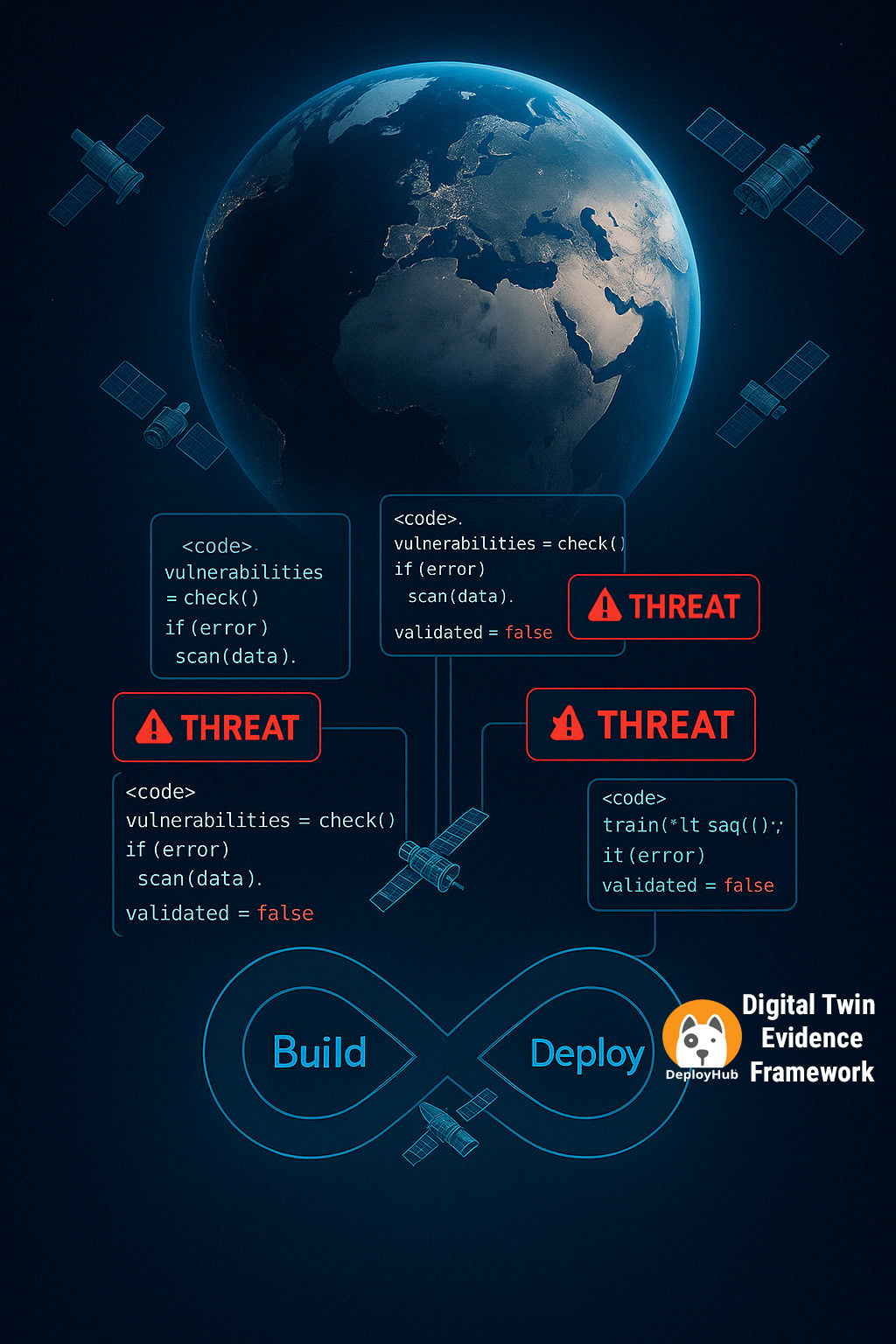

DeployHub focuses on the post-deployment portion of Continuous Threat Exposure Management by connecting vulnerability intelligence with the software actually running in production.
DeployHub uses SBOMs, deployment evidence, application versions, environments, endpoints, and CVE intelligence to help teams determine whether newly disclosed vulnerabilities are affecting live systems.
The DeployHub Platform

meet ortelius
DeployHub is built on Ortelius, the open-source foundation for post-deployment vulnerability intelligence. Ortelius connects SBOMs, deployment data, applications, environments, and endpoints so teams of all sizes and budget constraints can determine whether newly disclosed vulnerabilities are actually affecting live systems.
Ortelius is an open-source project incubating at the Continuous Delivery Foundation.