
Key concept
Modern software attack surfaces are constantly changing. Every new release can introduce new packages, dependencies, services, configurations, and deployment locations. At the same time, new vulnerabilities are disclosed continuously against software that may have been deployed weeks, months, or even years earlier.
That means your attack surface is not simply what your security tools discovered during development. It is the combination of what software is actually running, where it is running, what it depends on, and which newly discovered vulnerabilities affect it today.
Without that production context, security teams are left trying to defend an attack surface they cannot completely see.
Defining the Attack Surface
A software attack surface represents the components and relationships within deployed applications that could provide an opportunity for exploitation.
That includes:
The challenge is that these assets are highly interconnected. A single vulnerable open-source component may exist inside dozens of applications and hundreds of deployed endpoints.
Understanding the vulnerability alone is not enough. Security teams also need to know:
Is it running? Where is it running? What applications depend on it? Who owns those applications? And how large is the potential blast radius?
Most application security analysis happens before software reaches production.
SCA tools inspect dependencies. SAST analyzes source code. Container scanners inspect images. CI/CD security controls evaluate software as it moves through development.
These tools provide important information, but deployment changes the security equation.
Once software enters production:
Modern applications often contain hundreds or thousands of direct and transitive open-source dependencies.
A development team may never explicitly select many of those components. They arrive indirectly through frameworks, libraries, containers, and other dependencies.
When a vulnerability is discovered deep within that dependency tree, the immediate question becomes:
Where did we deploy it?
Without a relationship between software composition and deployment state, answering that question can require manual searches across repositories, registries, clusters, spreadsheets, and security tools.
DeployHub maintains those relationships so teams can move from a newly disclosed CVE directly to the affected software and production locations.
Knowing that an organization uses a vulnerable package is useful. Knowing exactly where that package is running is actionable. Effective attack surface visibility requires connecting the Package to the Endpoint. This relationship provides the context needed to determine whether a vulnerability represents theoretical exposure or an actual production risk.
DeployHub continuously maintains this software-to-deployment relationship so security teams can understand their attack surface from the perspective of what is actually running.
Security teams frequently face enormous vulnerability backlogs. One reason is that conventional vulnerability management often treats every discovered vulnerability as equally relevant, regardless of whether the affected software is actually deployed.
Attack surface visibility provides another dimension of prioritization: production exposure.
A vulnerability found in an unused development dependency does not represent the same operational risk as the same vulnerability running across mission-critical production systems.
DeployHub helps teams prioritize based on the software that is actually deployed and exposed.
Attack surface exposure is the set of software components, applications, services, environments, and endpoints that could be affected by a vulnerability or exploited by an attacker. DeployHub focuses specifically on the software attack surface that exists after deployment.
DeployHub maps software components and versions to the applications, environments, and endpoints where they are actually running. It continuously correlates this deployment intelligence with newly disclosed vulnerabilities to show where exposure exists in production.
DeployHub maps software components and versions to the applications, environments, and endpoints where they are actually running. It continuously correlates this deployment intelligence with newly disclosed vulnerabilities to show where exposure exists in production.
Traditional attack surface management often focuses on external assets, network-facing systems, or infrastructure discovery. DeployHub focuses on the software running inside those systems, including open-source packages, dependencies, application versions, and their relationship to live endpoints.
No. DeployHub uses an agentless architecture that builds production visibility from SBOMs, deployment evidence, CI/CD data, manifests, and other software supply chain metadata.
Yes. DeployHub can trace a vulnerable component or package version to the applications, environments, and endpoints where it has been deployed, helping teams immediately understand the scope of exposure.
Blast-radius analysis shows how broadly a vulnerability affects your production environment. DeployHub identifies every application, deployment, and endpoint associated with the vulnerable component so teams can quickly determine what needs attention.
When choosing a solution to monitor your attack surface, prioritize one that is non-invasive and requires no agents or endpoint scanners. Traditional agent-based tools can introduce performance overhead, create operational friction, and even expand your attack surface. Instead, look for platforms that use a digital twin, a virtual model of your deployed software environment, to continuously detect and correlate vulnerabilities without touching production systems.
A digital twin can observe component relationships, SBOMs, and deployment metadata to identify where a CVE exists and how far it spreads, all without disrupting workloads. Combined with real-time CVE feeds and automated remediation intelligence, a non-invasive, agentless approach provides faster, safer, and more accurate detection across modern distributed platforms.
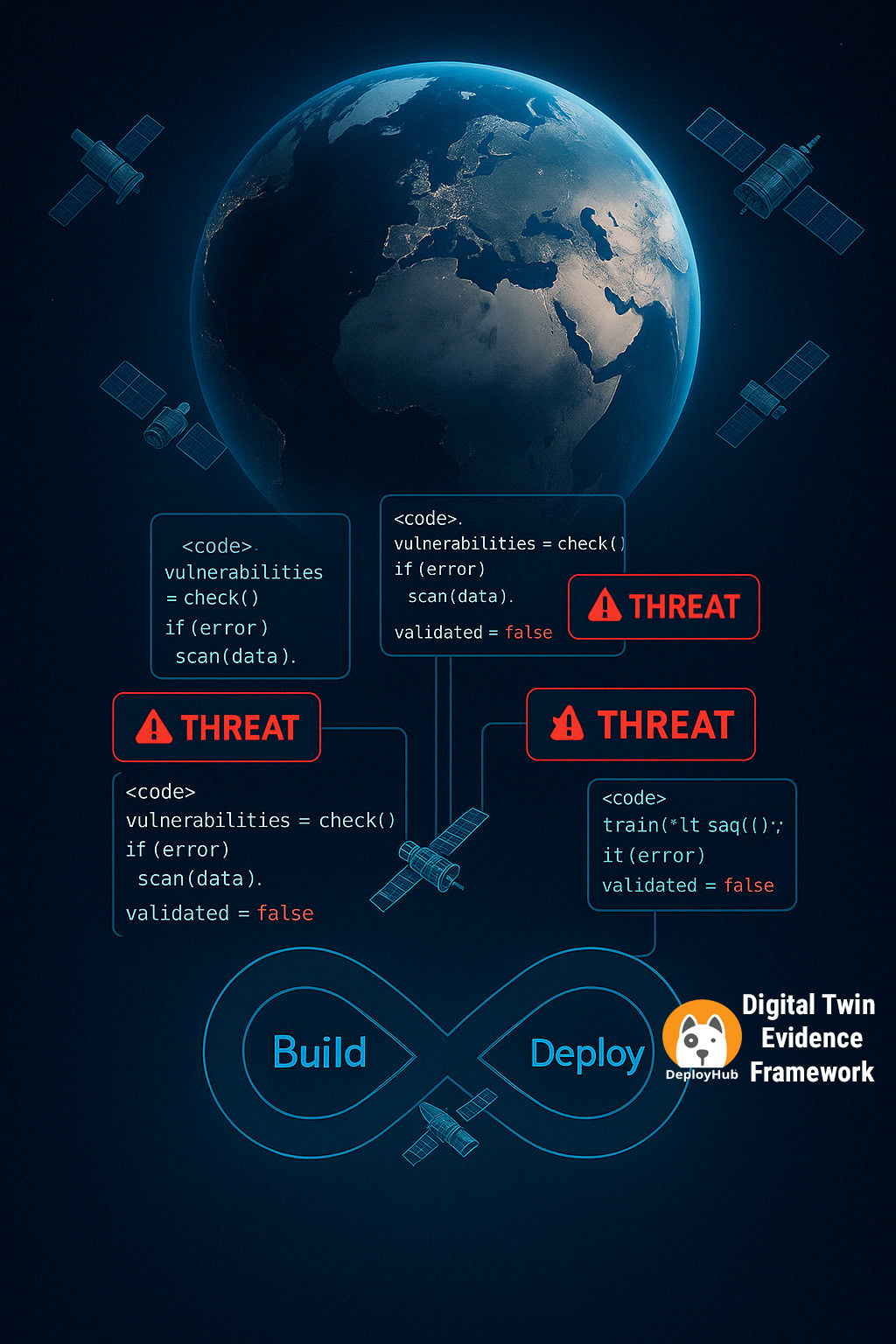

DeployHub helps manage the attack surface by connecting software composition, deployment evidence, and vulnerability intelligence into a continuously updated view of what is actually running in production. Instead of relying on static inventories or pre-deployment scan results, DeployHub maps packages and versions to applications, environments, and endpoints, making it easier to identify hidden exposure, understand blast radius, and prioritize the vulnerabilities that represent real operational risk. The result is a more accurate, actionable attack surface that security and platform teams can continuously monitor as software and threats change.
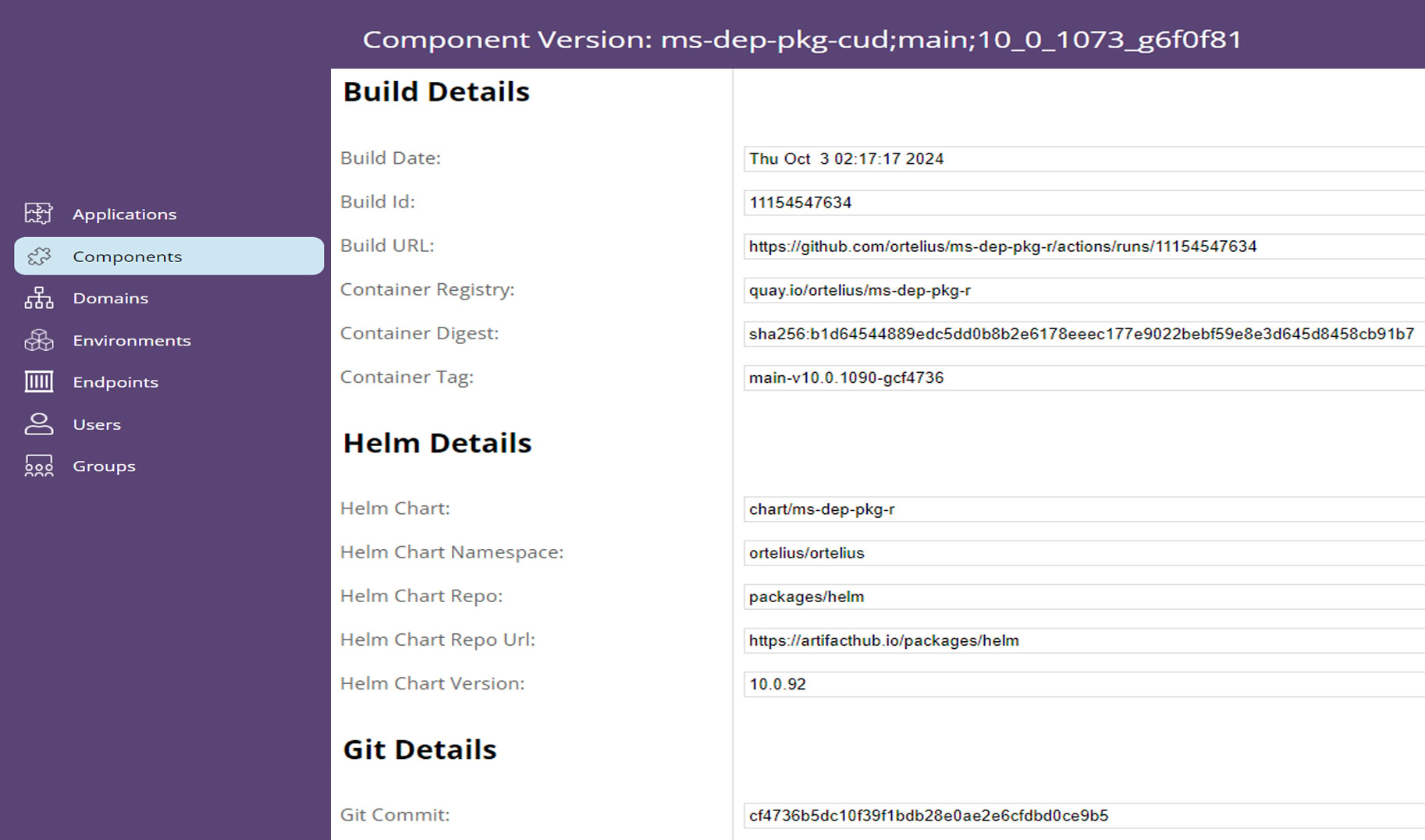
The DeployHub Platform
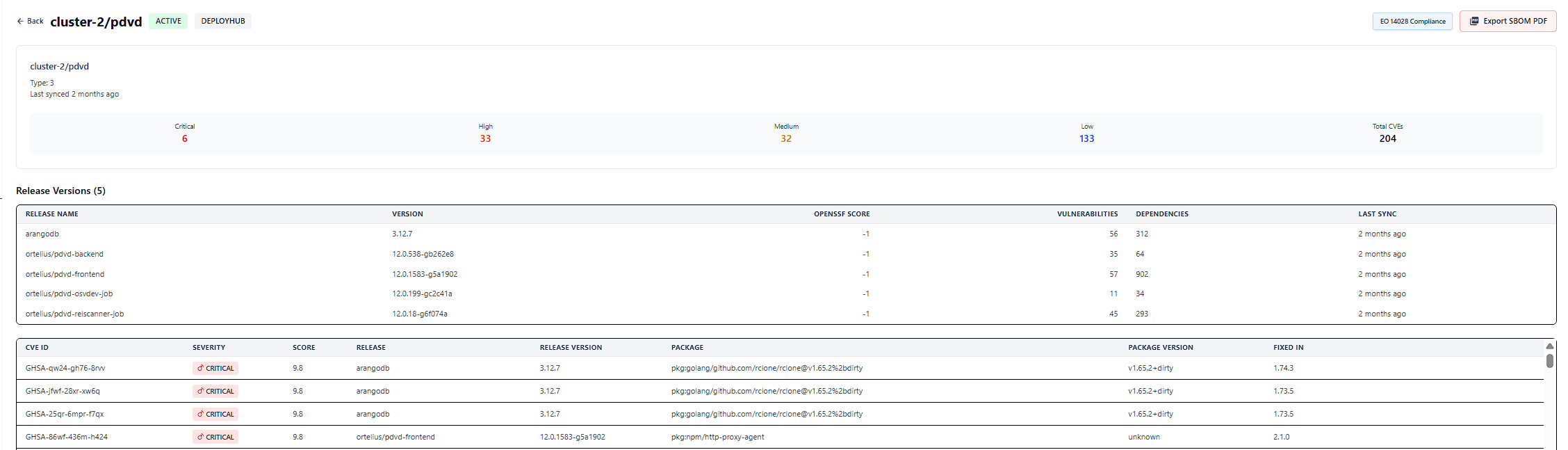
Know when a new CVE affects software you’ve already released by using your SBOM insights.
See the exact package, version, artifact, and endpoint affected by a newly reported CVE.
Continuously monitor your deployed software without agents or production rescanning.
DeployHub aggregates OpenSSF Scorecard data to help teams evaluate the security practices of the open-source projects they depend on, not just whether those projects currently have known CVEs
Turn static SBOM files into a live inventory of the open-source packages and versions running across your software estate.
Built on Ortelius, DeployHub gives teams an open, extensible foundation for software inventory, SBOM intelligence, deployment tracking, and vulnerability defense.

meet ortelius
DeployHub is built on Ortelius, the open-source foundation for post-deployment vulnerability intelligence. Ortelius connects SBOMs, deployment data, applications, environments, and endpoints so teams of all sizes and budget constraints can determine whether newly disclosed vulnerabilities are actually affecting live systems.
Ortelius is an open-source project incubating at the Continuous Delivery Foundation.