
Platform Use Cases
Agentless post-deployment solution for cloud-native, HPC, edge and on-orbit systems.
Open-source software is now part of nearly every modern application. It accelerates development, but it also creates a visibility problem after deployment. Once software is running in production, development teams have no visibility into what newly published CVEs are impacting their live systems, and potentially their end users.
A digital twin for open-source vulnerability management is a living model of your deployed software. It connects SBOMs, open-source packages, component versions, operational endpoints, deployment environments, and vulnerability data into one single view.
Instead of relying only on static scan results, DeployHub shows what is actually running. This matters because open-source risk changes after release. New CVEs are published every day, and a package that was safe during the build may become vulnerable after it has already been deployed.
Traditional scanners are important, but they usually provide a point-in-time view. They can tell you what may be vulnerable in a repository, image, or build artifact. They do not always show whether that vulnerable component is currently running in production, which application is using it, or which team is responsible for fixing it.
DeployHub closes this gap by mapping vulnerabilities to deployed software.
When a new CVE is disclosed, DeployHub’s digital twin for open-source vulnerability management checks the digital twin to determine whether the affected open-source package is part of any deployed application. It then shows where the vulnerable package is running, which application is impacted, and what component introduced the risk.
Security teams are overwhelmed by vulnerability alerts. Many findings are theoretical, duplicated, or disconnected from production reality. DeployHub reduces that noise by showing which vulnerabilities are tied to software that is actually running.
This allows teams to prioritize based on real exposure, not just generic CVE scores.
If a vulnerable package is deployed in a production application, it becomes a higher priority. If it exists only in an old build that is no longer running, it can be handled differently. This context helps teams focus on the vulnerabilities that matter most.
DeployHub also improves remediation by connecting each vulnerable package back to the application, component, version, and owner. Teams can quickly determine what needs to be fixed and who should take action.
Modern applications run across cloud, Kubernetes, containers, data centers, edge systems, and sometimes disconnected environments. Installing agents everywhere can be difficult and expensive.
DeployHub’s digital twin for open-source vulnerability management provides visibility through pipeline, SBOM, component, and deployment metadata. This gives organizations a practical way to understand post-deployment vulnerability exposure without requiring heavy endpoint agents or repeated rescanning.
DeployHub’s digital twin for open-source vulnerability management also creates a historical record of what was deployed, when it was deployed, which open-source packages were included, and which vulnerabilities were present.
This gives security, engineering, and compliance teams the evidence they need for audits, customer reviews, executive reporting, and incident response.
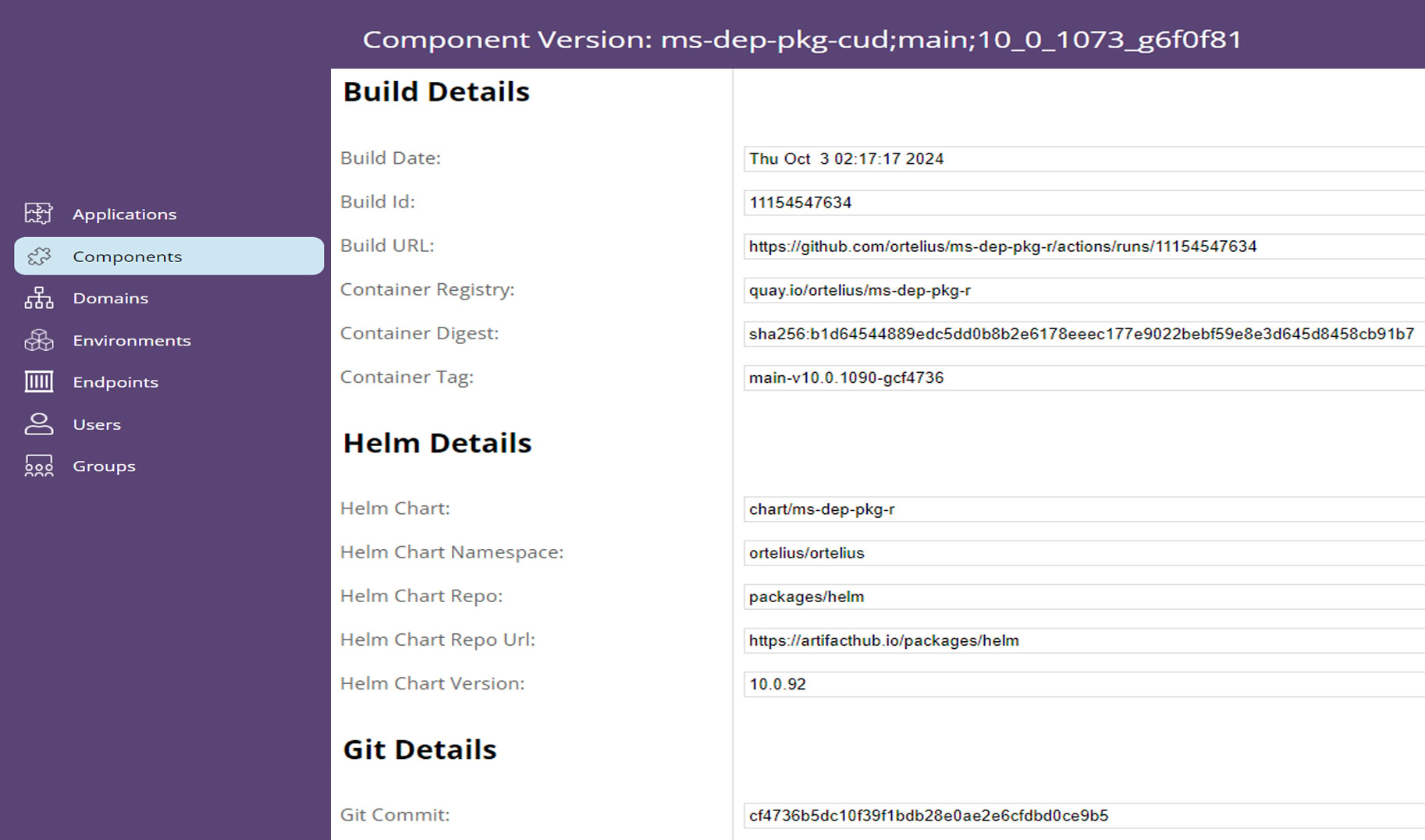
Digital Twin for open-source vulnerability management
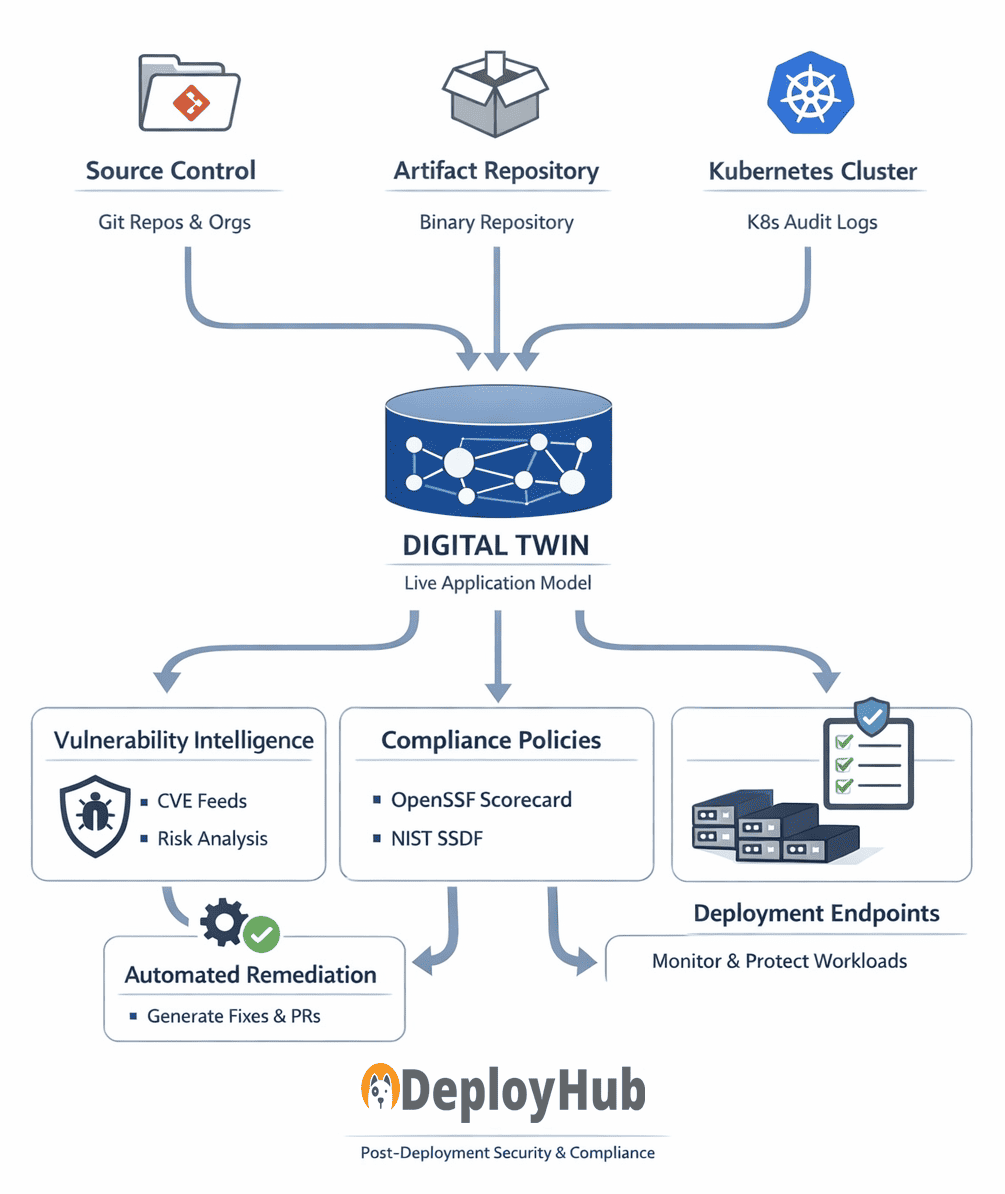
Here’s how DeployHub’s digital twin for open-source vulnerability management compares to Traditional SCA, Scanners, and SAST.
| Capability | DeployHub | Traditional SCA | Container Scanners | SAST |
|---|---|---|---|---|
| Maps CVEs to deployed applications | Yes | Limited | Container-only | No |
| Shows where vulnerable packages are running | Yes | No | Limited | No |
| Tracks ownership and blast radius | Yes | Limited | Limited | No |
| Uses SBOMs after deployment | Yes | Limited | Limited | No |
| Supports agentless operational visibility | Yes | Usually no | Usually no | No |
Know when a new CVE affects software you’ve already released by using your SBOM insights.
See the exact package, version, artifact, and endpoint affected by a newly reported CVE.
Continuously monitor your deployed software without agents or production rescanning.
Turn static SBOM files into a live inventory of the open-source packages and versions running across your software estate.
DeployHub aggregates OpenSSF Scorecard data to help teams evaluate the security practices of the open-source projects they depend on, not just whether those projects currently have known CVEs
Built on Ortelius, DeployHub gives teams an open, extensible foundation for software inventory, SBOM intelligence, deployment tracking, and vulnerability defense.

Take A Tour
Explore Ortelius SaaS and experience attack surface visibility in action with a quick, hands-on tour. DeployHub is based on Ortelius OS. Ortelius is incubating at the Continuous Delivery Foundation.
