Government Use Cases
Open-source software has become the backbone of nearly every modern government system, from mission applications and cloud workloads to satellite ground systems, logistics platforms, and citizen-facing digital services. Its transparency, flexibility, and rapid innovation make it indispensable to the public sector. But this same openness has made government infrastructure an increasingly attractive target for cyber adversaries seeking to exploit vulnerabilities at their source: the software supply chain.
Nation-state actors and organized cybercriminal groups have shifted their focus from traditional network-centric attacks to exploiting weaknesses buried deep in the open-source dependencies that power government software. The result? A surge in supply-chain-driven compromises capable of bypassing perimeter defenses and striking systems long after deployment.
Recent incidents, from dependency hijacks to zero-day exploits in widely used libraries, demonstrate how one upstream vulnerability can cascade across dozens of agencies, hundreds of systems, and thousands of endpoints. Traditional security stacks often detect these issues only after they’ve been weaponized, forcing public-sector teams into reactive mode with limited visibility into what’s actually running in production.
As agencies accelerate modernization and adopt cloud-native architectures, containers, and distributed microservices, their attack surface expands, increasing the need for government open source security. And with open-source components updating daily, the pace of new vulnerability disclosures continues to accelerate. The challenge is no longer whether vulnerabilities will reach live systems; it’s how quickly teams can identify them and take action.
DeployHub provides a strategic, proactive defense for government open source security by delivering continuous, post-deployment visibility into open-source vulnerabilities across all environments, even those that are distributed, air-gapped, or mission-critical.
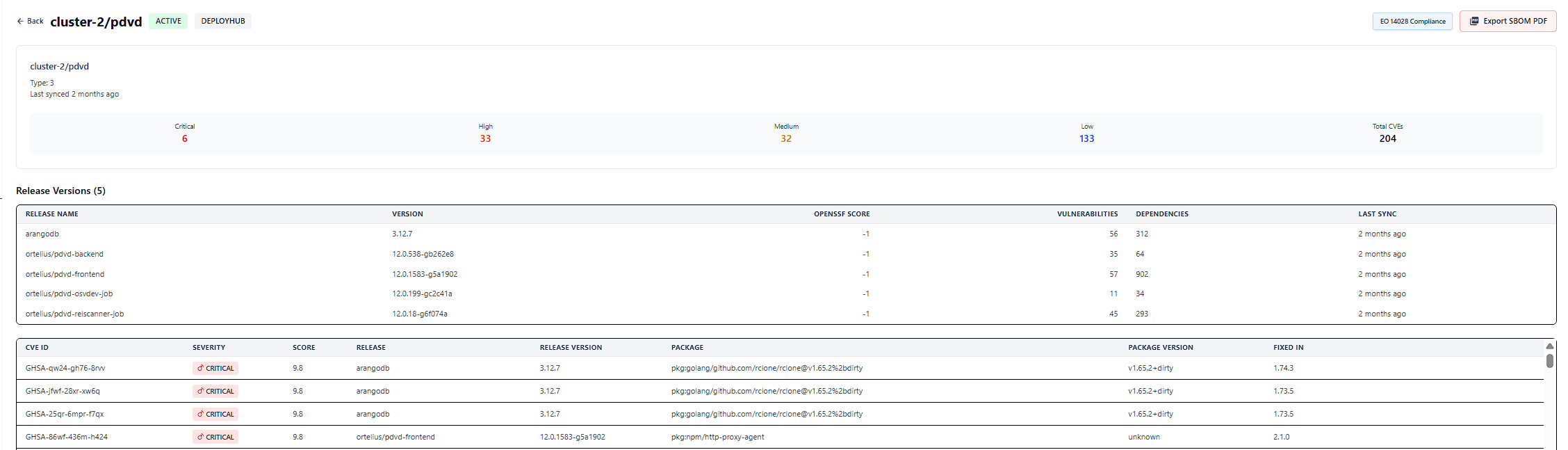
DeployHub monitors newly published CVEs and open-source advisories in near real time. Instead of waiting hours, days, or weeks for downstream tools to surface alerts, DeployHub identifies risks within minutes of public disclosure, providing government open source security with serious defensive guardrails.
Every government system has its own unique software composition. DeployHub builds a detailed deployment digital twin, correlating SBOM data to actual running components, containers, and endpoints.
This ensures agencies immediately know:
Which systems are exposed
Which environments are impacted
What dependencies introduced the risk
Instead of sifting through thousands of irrelevant alerts, teams see only the vulnerabilities that matter to their mission.
False alarms are a hidden threat to government open source security. DeployHub filters out irrelevant CVEs, reporting only those genuinely affecting deployed systems. This shifts teams from alert fatigue to informed, rapid decision-making, often reducing response timelines from months to hours.
Government teams often struggle to identify the safest, fastest path to remediation, especially for complex or legacy systems. DeployHub’s digital twin provides targeted fix recommendations, helping developers and security personnel address issues quickly and consistently across agencies and systems.
DeployHub integrates directly with DevSecOps pipelines, SBOM workflows, and zero-trust architectures, supporting:
Continuous monitoring
Security posture reporting
Software lifecycle governance
Federal modernization mandates
Secure cloud and hybrid deployments
This avoids the overhead of redesigning existing government infrastructure or installing invasive agents on mission systems.
The public sector faces a uniquely difficult cybersecurity mission. Deployed systems often live in contested environments, operate with limited physical access, or support critical services where downtime is unacceptable. Vulnerabilities buried in open-source software must be detected and addressed quickly, before they can be exploited as attack vectors against government operations.
DeployHub fills a critical defense gap by enabling agencies to:
See vulnerabilities the moment they emerge
Understand exactly where they exist in live systems
Respond with speed, accuracy, and confidence
By focusing on post-deployment detection, where vulnerabilities become real threats,DeployHub provides a defensive strategy for Government open source security aligned with the evolving needs of federal, state, and local government organizations.
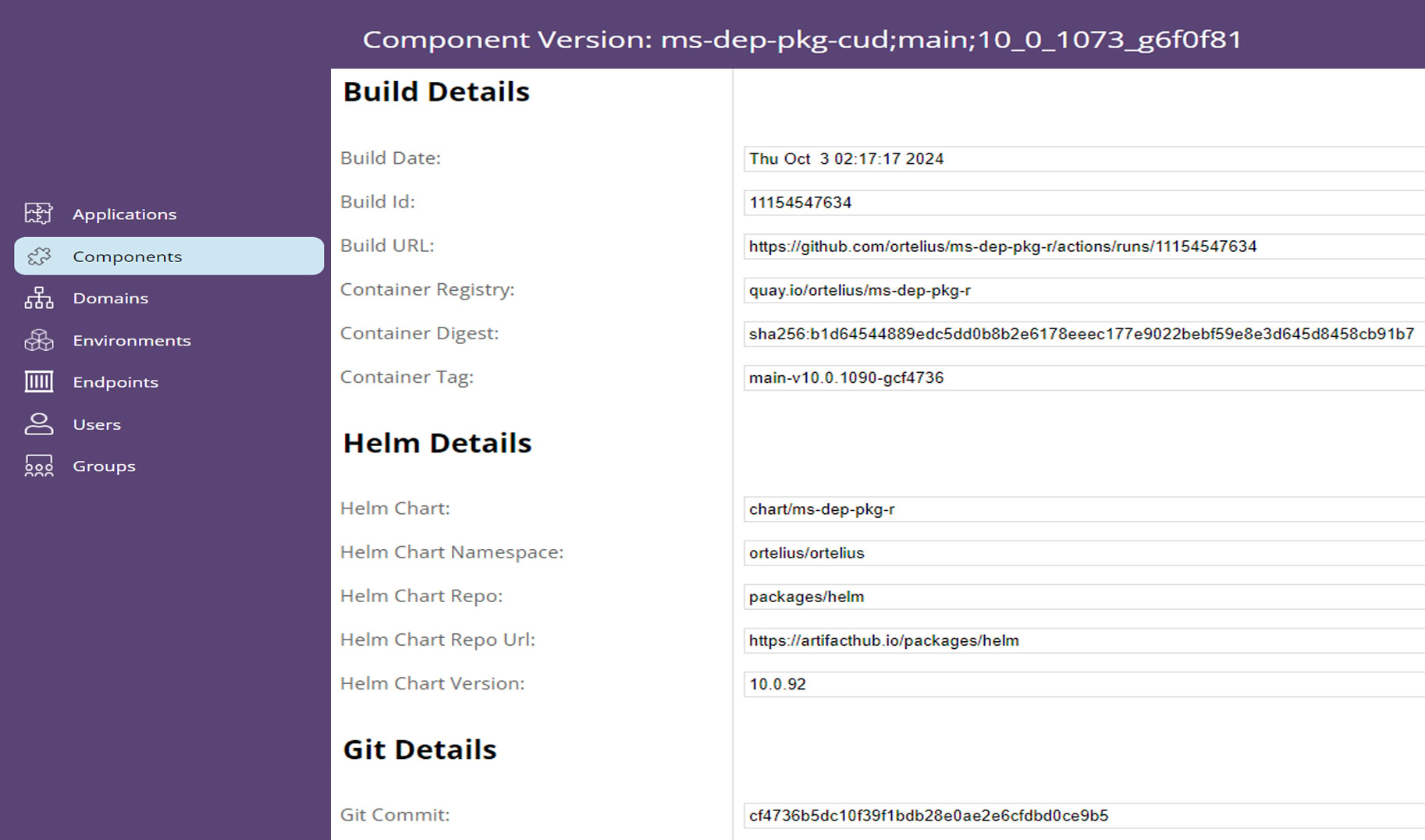
The DeployHub Platform
Here’s how DeployHub compares to Traditional SCA, Scanners, and SAST.
| Capability | DeployHub | Traditional SCA | Container Scanners | SAST |
|---|---|---|---|---|
| Maps CVEs to deployed applications | Yes | Limited | Container-only | No |
| Shows where vulnerable packages are running | Yes | No | Limited | No |
| Tracks ownership and blast radius | Yes | Limited | Limited | No |
| Uses SBOMs after deployment | Yes | Limited | Limited | No |
| Supports agentless operational visibility | Yes | Usually no | Usually no | No |
UEI: D2NDAMGPJZ69
Cage Code: 03N22
Know when a new CVE affects software you’ve already released by using your SBOM insights.
See the exact package, version, artifact, and endpoint affected by a newly reported CVE.
Continuously monitor your deployed software without agents or production rescanning.
DeployHub aggregates OpenSSF Scorecard data to help teams evaluate the security practices of the open-source projects they depend on, not just whether those projects currently have known CVEs
Turn static SBOM files into a live inventory of the open-source packages and versions running across your software estate.
Built on Ortelius, DeployHub gives teams an open, extensible foundation for software inventory, SBOM intelligence, deployment tracking, and vulnerability defense.

meet ortelius
DeployHub is built on Ortelius, the open-source foundation for post-deployment vulnerability intelligence. Ortelius connects SBOMs, deployment data, applications, environments, and endpoints so teams of all sizes and budget constraints can determine whether newly disclosed vulnerabilities are actually affecting live systems.
Ortelius is an open-source project incubating at the Continuous Delivery Foundation.