Platform Use Cases

CTEM Platform for Continuous Post-Deployment Exposure Management

DeployHub is a CTEM platform that connects vulnerability intelligence with the software actually running in production. By linking SBOMs, artifacts, deployment locations, endpoints, and ownership, DeployHub helps teams identify real exposure, understand blast radius, and prioritize what needs to be fixed first.

Unlike traditional vulnerability tools that stop at detection, DeployHub supports post-deployment CTEM Platform by continuously showing which exposures affect live systems and providing the context needed to reduce risk faster.

ย 

The Risk

Vulnerability Data Does Not Tell You What Is Actually Exposed

Security teams already have more vulnerability data than they can act on. The real challenge is determining which findings represent meaningful production exposure.

A CVE may appear in a repository, SBOM, scanner report, or container image without revealing whether the affected software is actually deployed, where it is running, or what business systems depend on it.

A CTEM platform closes that gap by connecting vulnerability intelligence to production context. Teams can move beyond long lists of potential issues and focus on the exposures that are actually affecting deployed systems.

Platform Benefits

How DeployHub Operationalizes CTEM

DeployHub makes Continuous Threat Exposure Management actionable by connecting vulnerability intelligence with deployment evidence and application ownership.
ย 

Instead of treating vulnerability findings as isolated records, DeployHub’s CTEM Platform continuously evaluates which software is deployed, which vulnerabilities affect it, where exposure exists, and who is responsible for remediation. This gives security and engineering teams the production context needed to prioritize and reduce exposure continuously.

DeployHub Enables:

Continuous Exposure Discovery

Continuously correlate deployed software with newly disclosed vulnerability intelligence to identify emerging production exposure.

Production Context

Connect vulnerable packages to applications, environments, deployment locations, and endpoints.

Exposure Prioritization

Focus remediation on vulnerabilities that are actually affecting deployed software rather than every theoretical finding.

Blast Radius Analysis

See which applications and endpoints are affected by a vulnerable component and understand the potential scope of exposure.

Ownership and Mobilization

Connect affected applications with the teams responsible for remediation so issues can move quickly from discovery to action.

Continuous Evidence

Maintain a historical record of deployment, vulnerability, and remediation evidence to demonstrate that exposure has been reduced.

Discover Which Vulnerabilities Impact Your Systems

Use the free DeployHub SaaS platform to detect and locate vulnerabilities across production environments, without waiting for budget approval or a lengthy procurement cycle.

Our free SaaS platform is based on Ortelius, an open-source project incubating at the Linux Foundation. No budget authority. No agents. No reason to wait.

Need Help?ย  Schedule a tech call with the DeployHub Team or chat with the Ortelius Community

Platform Comparison

DeployHub’s CTEM Platform vs. Traditional Vulnerability Scanners

Capability DeployHub Traditional SCA Container Scanners SAST
Maps CVEs to deployed applications Yes Limited Container-only No
Shows where vulnerable packages are running Yes No Limited No
Tracks ownership and blast radius Yes Limited Limited No
Uses SBOMs after deployment Yes Limited Limited No
Supports agentless operational visibility Yes Usually no Usually no No

How DeployHub Supports the CTEM Lifecycle

Continuous Threat Exposure Management is typically organized around five stages: scoping, discovery, prioritization, validation, and mobilization.

DeployHub focuses on the post-deployment software exposure portion of that lifecycle:

  • Scope: Identify the applications, environments, packages, and endpoints that make up the production software estate.
  • Discover: Continuously identify newly disclosed vulnerabilities affecting deployed components.
  • Prioritize: Determine which exposures represent real production risk based on where vulnerable software is actually running.
  • Validate: Confirm whether affected components are present in deployed applications and understand their blast radius.
  • Mobilize: Connect affected applications to responsible owners and provide the information required to remediate quickly.

Key Concept:ย 

Learn more about Continuous Threat Exposure Management (CTEM)

Explore DeployHub Features

Detect

Know when a new CVE affects software you’ve already released by using your SBOM insights.

Learn more

Locate

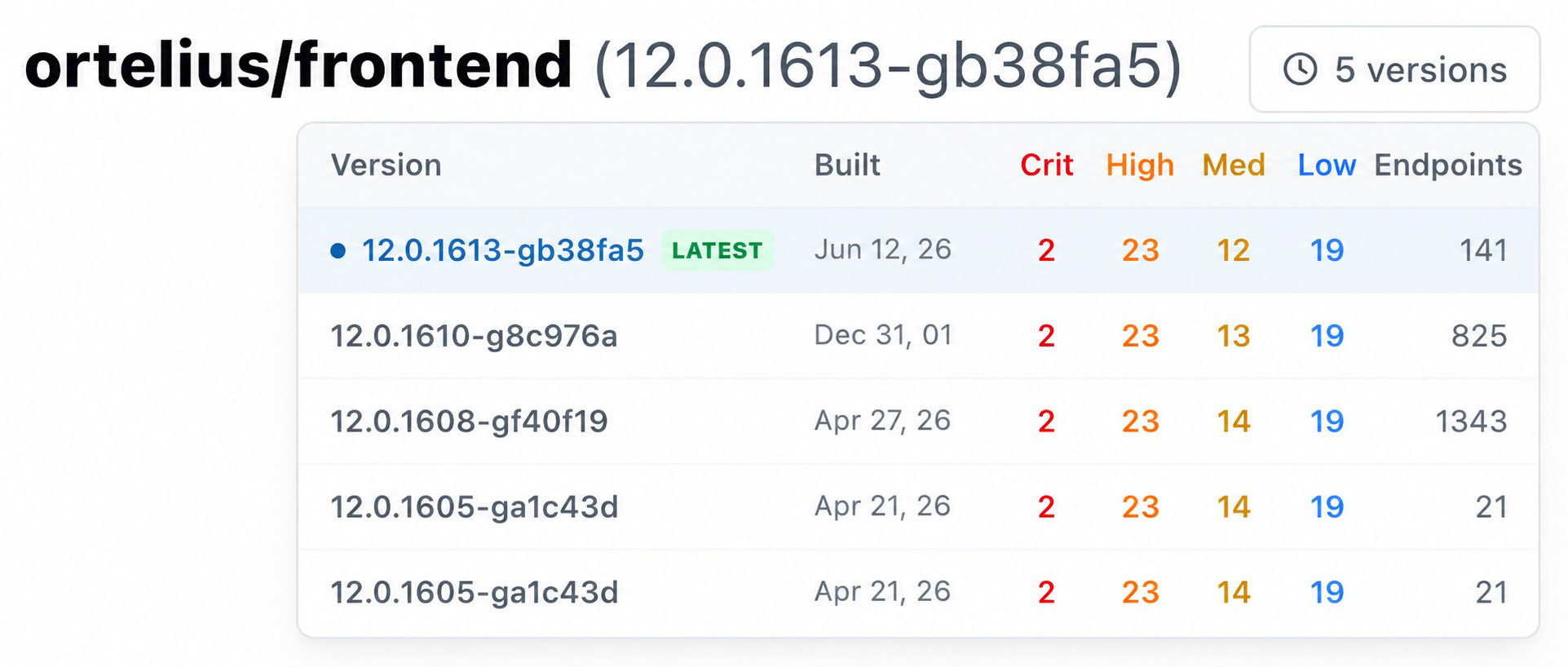
See the exact package, version, artifact, and endpoint affected by a newly reported CVE.

Learn more

Defend

Continuously monitor your deployed software without agents or production rescanning.

Learn more

Measure Open-Source Project Risk With OpenSSF Scorecard

DeployHub aggregates OpenSSF Scorecard data to help teams evaluate the security practices of the open-source projects they depend on, not just whether those projects currently have known CVEs

Learn more

Make Your SBOMs Operational

Turn static SBOM files into a live inventory of the open-source packages and versions running across your software estate.

Learn more

Open Source at the Core

Built on Ortelius, DeployHub gives teams an open, extensible foundation for software inventory, SBOM intelligence, deployment tracking, and vulnerability defense.

Learn more

ortelius-stacked-color-small

meet ortelius

Explore the Open-Source Core Behind DeployHub

DeployHub is built on Ortelius, the open-source foundation for post-deployment vulnerability intelligence. Ortelius connects SBOMs, deployment data, applications, environments, and endpoints so teams of all sizes and budget constraints can determine whether newly disclosed vulnerabilities are actually affecting live systems.

Ortelius is an open-source project incubating at the Continuous Delivery Foundation.

Our Partners

catalyst campus
sda tap lab logo