Key Concept

Automated Vulnerability Detection for Live Systems

Why Platform Engineers Need Continuous, Real-Time Defense

Automated vulnerability detection for live systems is essential for keeping up with the pace of open-source risk. A platform engineer or DevOps engineer’s job doesn’t stop once code is deployed. In today’s cloud-native world, production systems evolve continuously,  containers are rebuilt, dependencies shift, and new vulnerabilities emerge daily. The traditional “scan before deploy” mindset no longer keeps pace. What you need is automated vulnerability detection that continuously monitors your running systems and closes the loop between discovery and remediation.

Defining Automated Vulnerability Detection

What is Automated Vulnerability Detection?

Automated Vulnerability Detection is the continuous process of identifying, tracking, and prioritizing security vulnerabilities in software systems without manual intervention. It uses automation to scan, monitor, and correlate vulnerability data across codebases, containers, and live environments — often leveraging Software Bills of Materials (SBOMs), threat intelligence feeds, and AI-driven analysis.

Unlike traditional scanning tools that operate only during build or deployment stages, automated vulnerability detection extends into runtime, continuously observing active systems for new CVEs (Common Vulnerabilities and Exposures). This enables real-time awareness of exposure, faster remediation, and a reduction in human error and alert fatigue.

Choosing an Automated Vulnerability Detection Platform

When choosing an automated vulnerability detection platform, prioritize one that is non-invasive and requires no agents or endpoint scanners. Traditional agent-based tools can introduce performance overhead, create operational friction, and even expand your attack surface. Instead, look for platforms that use a digital twin,  a virtual model of your deployed software environment,  to continuously detect and correlate vulnerabilities without touching production systems.

A digital twin can observe component relationships, SBOMs, and deployment metadata to identify where a CVE exists and how far it spreads, all without disrupting workloads. Combined with real-time CVE feeds and automated remediation intelligence, a non-invasive, agentless approach provides faster, safer, and more accurate detection across modern distributed platforms.

Importance of Vulnerability Detection in Production

Adding automated vulnerability detection to your Platform Engineering and DevOps pipelines creates a proactive defense against new threats targeting live systems. With 45.4% of discovered vulnerabilities unresolved within a 12-month period, automation becomes essential. 

Continuous monitoring extends your security posture beyond build and deploy, ensuring visibility into what’s actually running. By integrating automated vulnerability detection, platform teams gain real-time insights into the health of their environments, instantly identifying impacted services when new CVEs emerge. This approach keeps security continuously aligned with organizational policies while reducing manual toil — turning runtime awareness into an adaptive, automated defense strategy.

Automated Vulnerability Detection: The Missing Layer

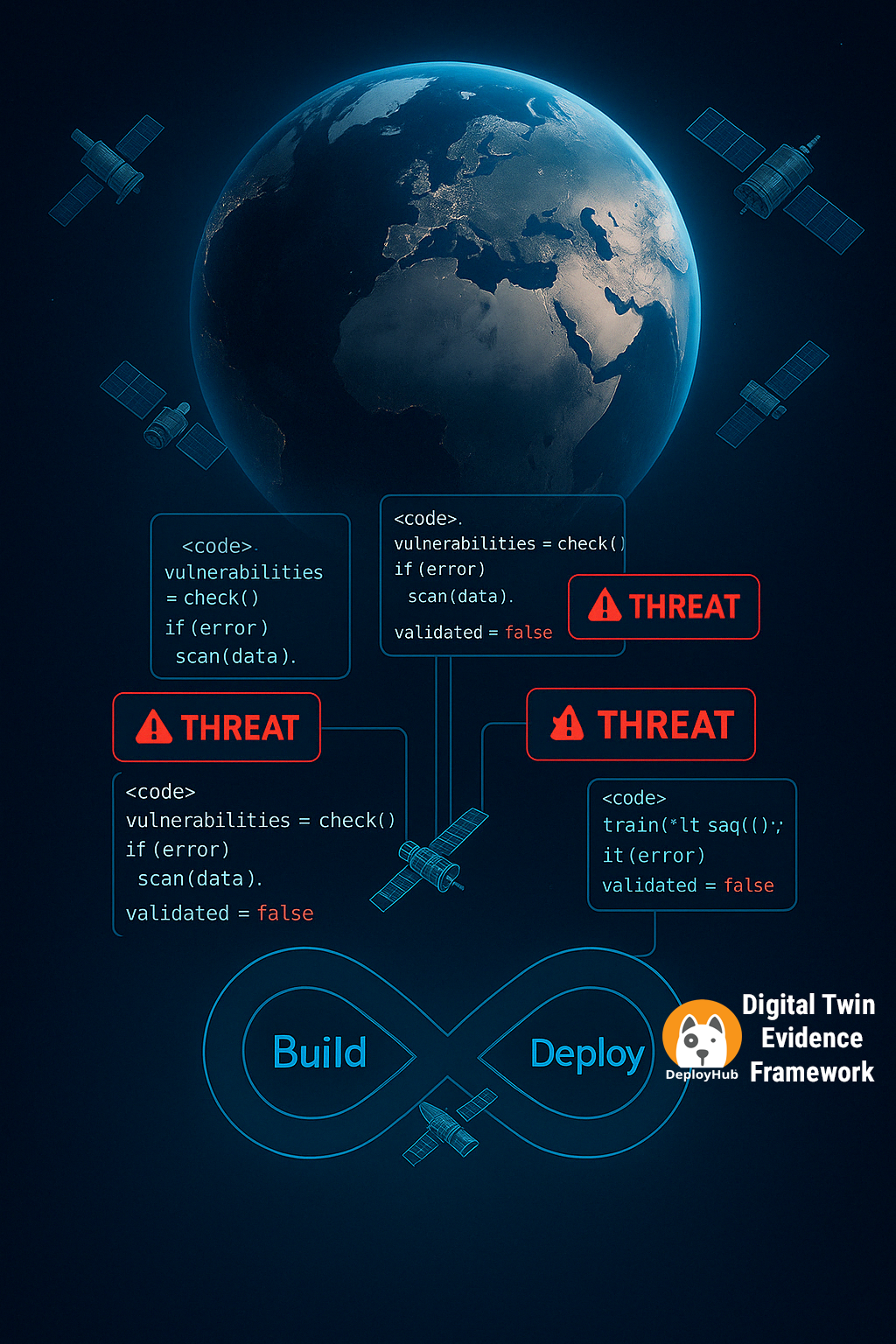
Automated vulnerability detection extends security beyond your pipeline into your live environments. By mapping deployed components against vulnerability feeds in real time, DeployHub continuously identifies risks as they appear.

Unlike static scanners that only check your source code or images, DeployHub connects runtime insights to SBOM data — showing exactly which endpoints, clusters, and services are impacted. This turns your SBOMs into living intelligence instead of static lists.

With automation, vulnerabilities are not just detected — they’re correlated to deployment metadata, ownership, and remediation paths. Platform engineers gain a clear, actionable view of every CVE’s blast radius across applications.

For platform teams maintaining production reliability and compliance, automated vulnerability detection offers:

  • Real-time visibility: Continuously monitors your live environment for new vulnerabilities without manual rescanning.

  • Faster remediation: Maps CVEs directly to affected containers and services, cutting response time from days to hours.

  • Reduced noise: Focuses on what’s actively deployed and exploitable, eliminating alert fatigue.

  • Operational assurance: Provides traceability for audits, SBOM compliance, and DoD or NIST 800-53 standards.

Best Practices for Automated Vulnerabilty Detection

Adding automated vulnerability detection to your platform engineering workflow isn’t just a security enhancement — it’s a defensive strategy for live systems. Integration gives you a self-defending environment that reacts to new CVEs in real time.
Below are key best practices to help your team implement automation effectively and securely.

1. Adopt Continuous Monitoring

Move beyond pre-deployment scans. Implement real-time, continuous detection that monitors live environments for new vulnerabilities as they appear.

2. Go Agentless When Possible

Use non-invasive, agentless systems that rely on digital twins and SBOM intelligence instead of endpoint scanners. This approach avoids performance overhead and blind spots in production.

3. Integrate with Platform Workflows

Embed detection directly into your Platform Engineering toolchain — CI/CD, Kubernetes, ArgoCD, or observability stacks — to make vulnerability management seamless.

4. Leverage SBOM Correlation

Tie every vulnerability to a specific open-source component, container, or cluster. SBOM-driven mapping reveals your actual attack surface and helps you act faster.

5. Prioritize by Risk and Exposure

Automated detection should help you focus on what matters — exploitable vulnerabilities in live workloads — reducing alert fatigue and wasted cycles.

6. Automate Remediation Workflows

Connect detection data to your patching or rebuild pipelines. Reduce mean time to remediate (MTTR) by automating fixes across environments.

7. Maintain Security-as-Code

Keep configurations, rules, and policies version-controlled. Treat security as part of your platform infrastructure so it’s auditable, repeatable, and easy to evolve.

8. Align with Compliance Frameworks

Ensure your detection and reporting processes meet NIST, FedRAMP, or internal policy standards to maintain trust and readiness for audits.

9. Visualize and Share Results

Provide clear dashboards for vulnerability trends, ownership, and remediation progress — enabling DevOps and security teams to collaborate effectively.

10. Continuously Validate and Improve

Regularly test detection pipelines, tune false positives, and evolve your automation as new technologies and threats emerge.

Build Resilience Through Automation

As environments scale and release velocity increases, manual security processes simply can’t keep up. The future of secure operations lies in automated vulnerability detection that’s deeply integrated into your platform workflows.

DeployHub makes this possible by transforming continuous security monitoring into an intelligent, automated process that protects your live systems — so you can deploy fast, stay compliant, and sleep better at night.

Use DeployHub for Automated Vulnerability Detection

Code-level vulnerabilities don’t end at deployment. In cloud-native and distributed architectures, they persist—often undetected—across Kubernetes, edge, and embedded environments.

With DeployHub, post-deployment vulnerabilities are swiftly detected and neutralized across all software assets within minutes, not months. With DeployHub added to your process, dangerous vulnerabilities don’t linger in production.

The DeployHub Platform

vulnerability package search

Frequently Asked Questions

Automated detection continuously monitors live systems for vulnerabilities, whereas penetration testing is a point-in-time, manual simulation of attacks. Detection focuses on real-time exposure, while pen tests identify potential weaknesses periodically.

Yes. Modern platforms correlate SBOM data, runtime metadata, and deployment configurations, enabling detection of misconfigurations that could create exploitable vulnerabilities in live environments.

By mapping vulnerabilities to specific services and owners, the platform can trigger automated alerts, assign remediation tasks, and provide audit-ready reporting that accelerates incident response.

Absolutely. Non-invasive, agentless platforms monitor workloads across on-premises, cloud, and edge environments without introducing performance overhead, providing a unified view of vulnerabilities.

Prioritization is based on exploitability, exposure, affected services, and compliance impact. Risk scoring ensures teams focus on the most critical issues first, reducing alert fatigue.

SBOMs provide an inventory of all components and dependencies in a system. When combined with real-time CVE feeds, they allow teams to identify which specific components in production are at risk.

While zero-day exploits are challenging, platforms that integrate real-time threat intelligence and continuous monitoring can flag unusual behavior, dependencies, or emerging CVEs, helping mitigate exposure quickly.

Detection platforms maintain traceability of CVEs, affected assets, and remediation steps, providing detailed dashboards and logs that align with frameworks like NIST, FedRAMP, or ISO standards.

No. Secure coding remains foundational. Automated detection complements it by continuously monitoring deployed systems, identifying runtime vulnerabilities that static code analysis might miss.

Digital twins create a virtual replica of live systems, allowing detection tools to observe component relationships and deployment metadata without touching production. This reduces false positives and ensures safer, more precise scanning.

ortelius-stacked-color-small

Take A Tour

See Open Source Software Security In Action.

Explore Ortelius and experience an open-source platform for post-deployment vulnerability management in action with a quick, hands-on overview. DeployHub, based on Ortelius OS, integrates with CI/CD tools like Jenkins and Helm, providing real-time security checks, tracking vulnerabilities, and supporting DevSecOps integration with the Ortelius Open-source CLI interface.

Additional Resources

Ortelius Free Sign-Up

Don’t Let Vulnerabilities Linger in Production

Sign up for a 5-day Ortelius implementation—DeployHub’s free SaaS platform—and get expert CI/CD integration for real-time SBOM monitoring and vulnerability detection.